
A masochist and his MacBook (Week 26)
TL;DR: I spent a good chunk of this week trying to drag a 14-year-old MacBook Pro into the present by way of every Linux distro that would boot, got a screen full of static for my trouble, and eventually clawed my way to a working Fedora install. Also: my Benchy finally floats, purple gaming gear keeps breeding on my desk, and I scheduled a memorial tattoo for Puck (lost in 2015).
A masochist and his MacBook
The sudden ADHD-driven side-project of my week was a mid-2012 Retina MacBook Pro that macOS has long since given up on. Still in decent shape physically - although I did print some new feet for it.
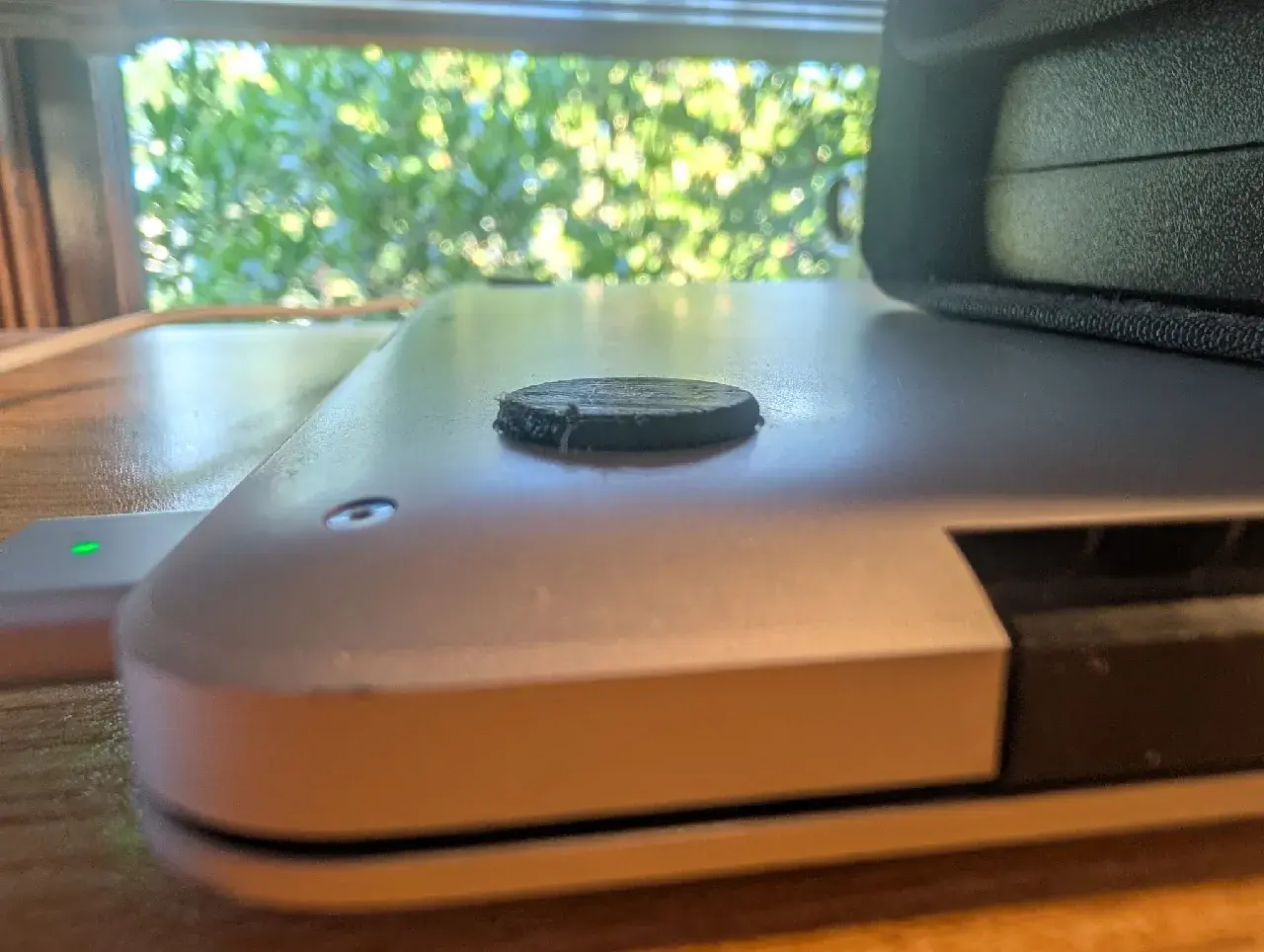
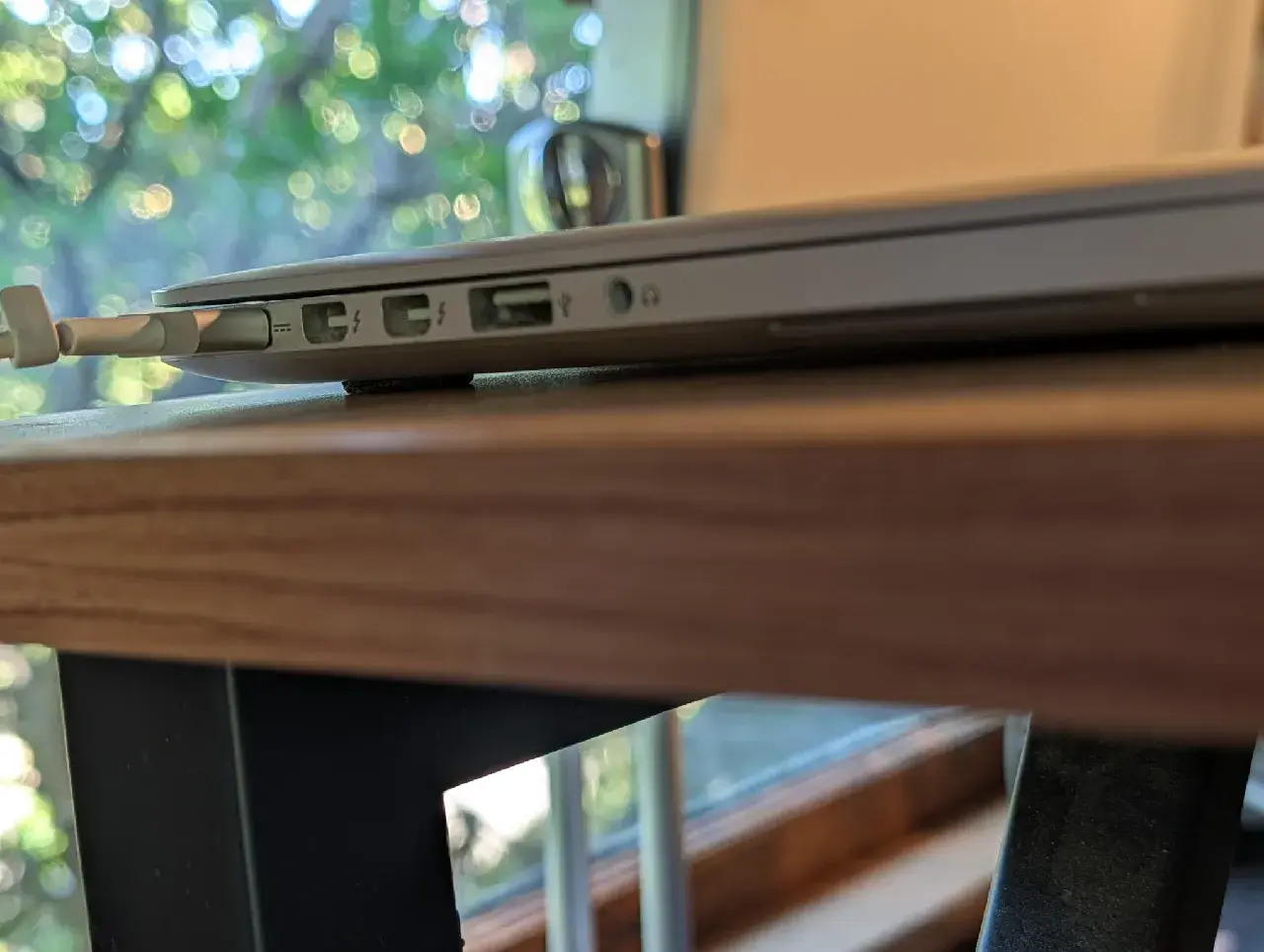
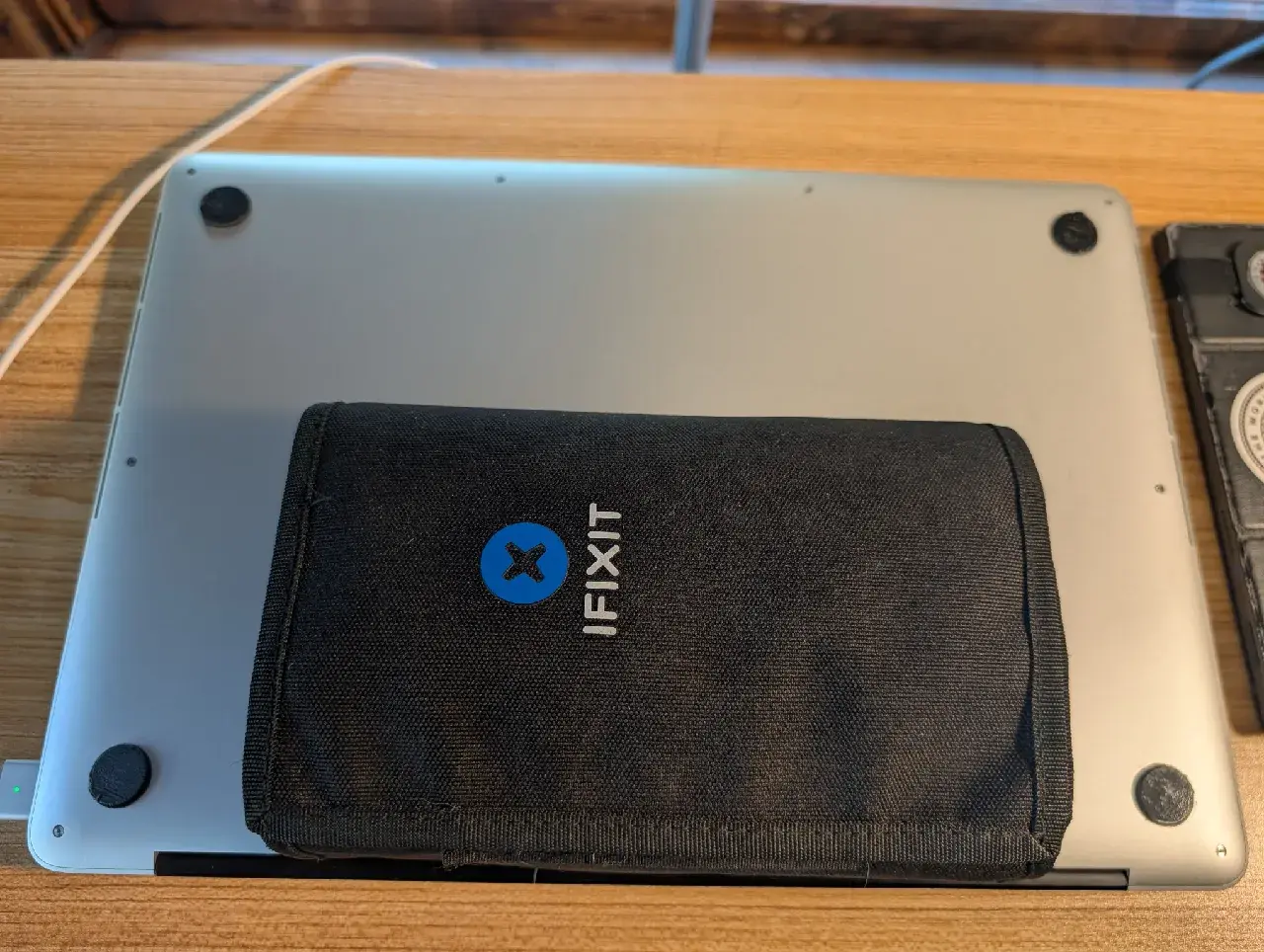
But, it's been abandoned by Apple for OS updates. I got it into my head that I could give it a few more years of life as a basement word processor or a tinkering terminal, and proceeded to spend the week learning exactly how stubborn that idea was.
The tour: the latest Ubuntu LTS installer gave me nothing but a green screen (probably nvidia drivers). Linux Mint installed in safe mode, got me wifi and a touchpad, but never figured out suspend.
So I figured I'd back out and try a network reinstall of macOS instead, which is how I ended up face to face with Mountain Lion again - which I guess was near enough to the original OS with which this thing shipped:
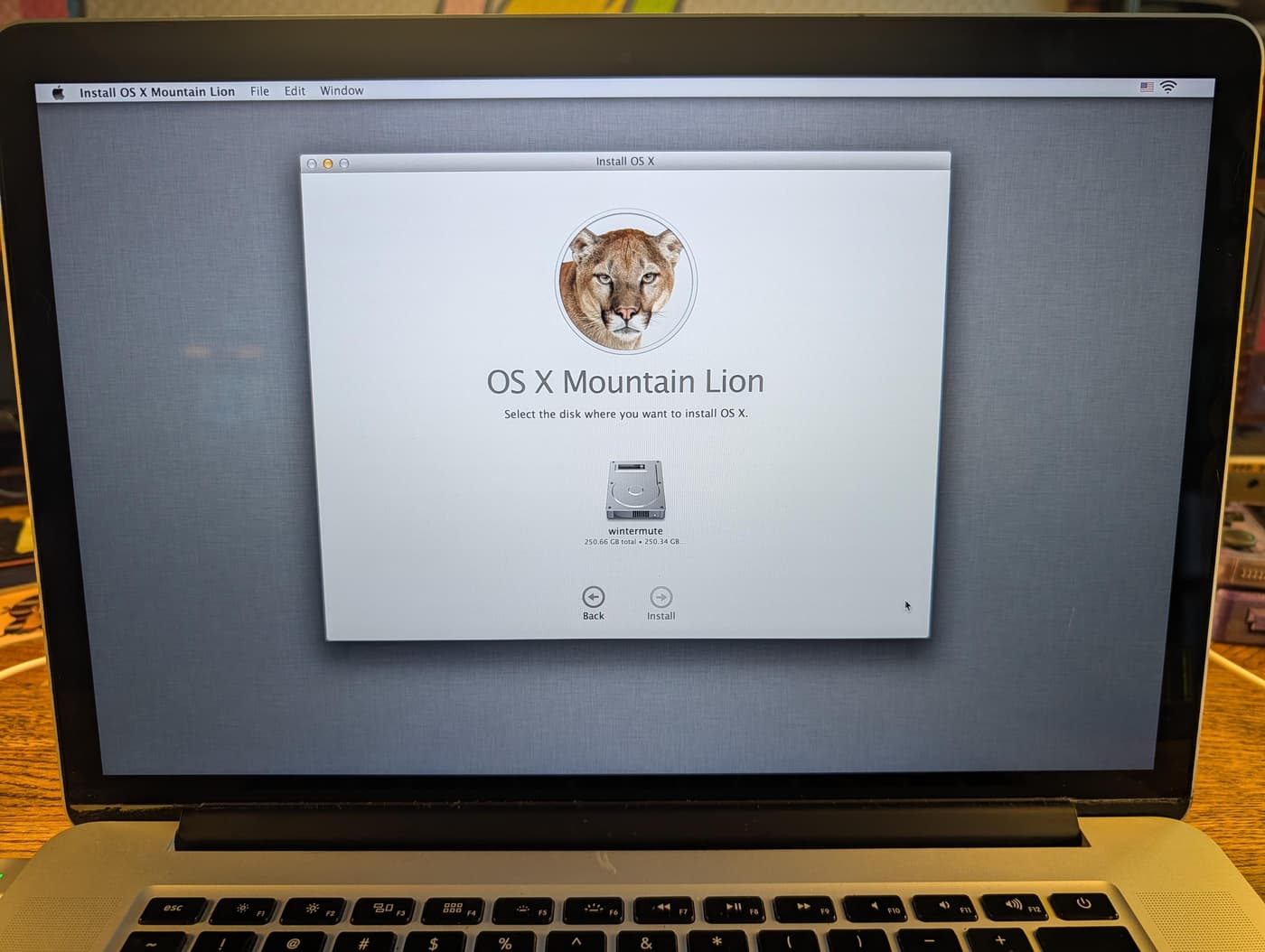
Which, of course, turned out to be too old. Too old for what? Yes.
Being a masochist, I clawed the thing up to Catalina. That's newish-enough to run the latest version of Firefox and many other apps - but things are moving on from that version of macOS.
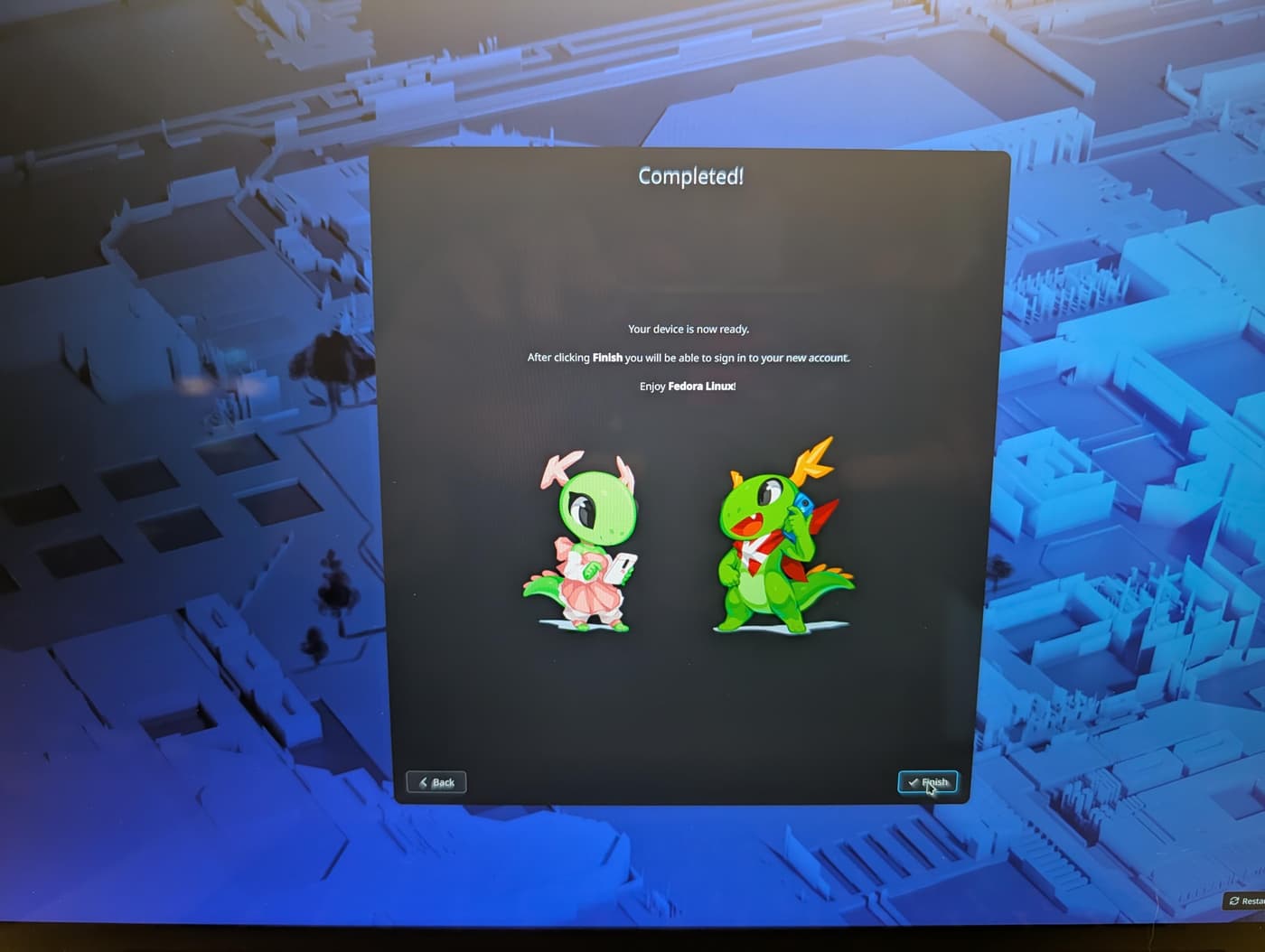
So then I went for a Fedora KDE desktop dual-boot. The live ISO behaved better than Mint did, right up until the installer segfaulted on me.
Turns out it's a known bug: Fedora's new web-based installer (codenamed "slitherer") crashes on nvidia hardware, and the workaround is to point Anaconda at Firefox instead. After that, cute dragons:
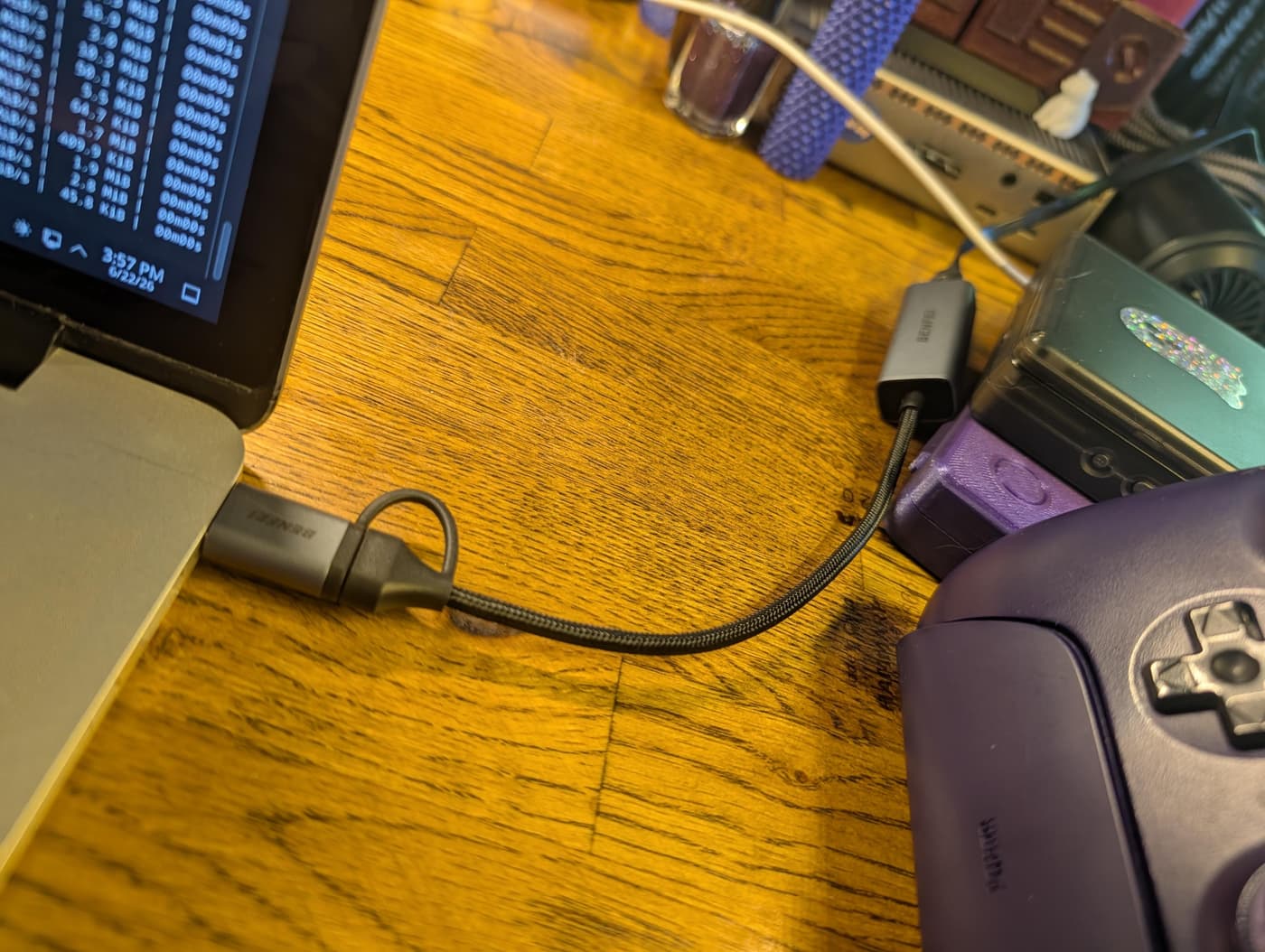
The other unsung hero was a cheap USB Ethernet widget, because it turns out every Linux distro on earth hates the wifi hardware in every Apple laptop:
So where did I land, after all that? Tallying it up: Ubuntu didn't work at all, Mint mostly worked (wifi yes, suspend never), and Fedora KDE worked including suspend but not wifi, until I activated some non-free repos to chase the wifi drivers, did a software upgrade, rebooted, and got this:
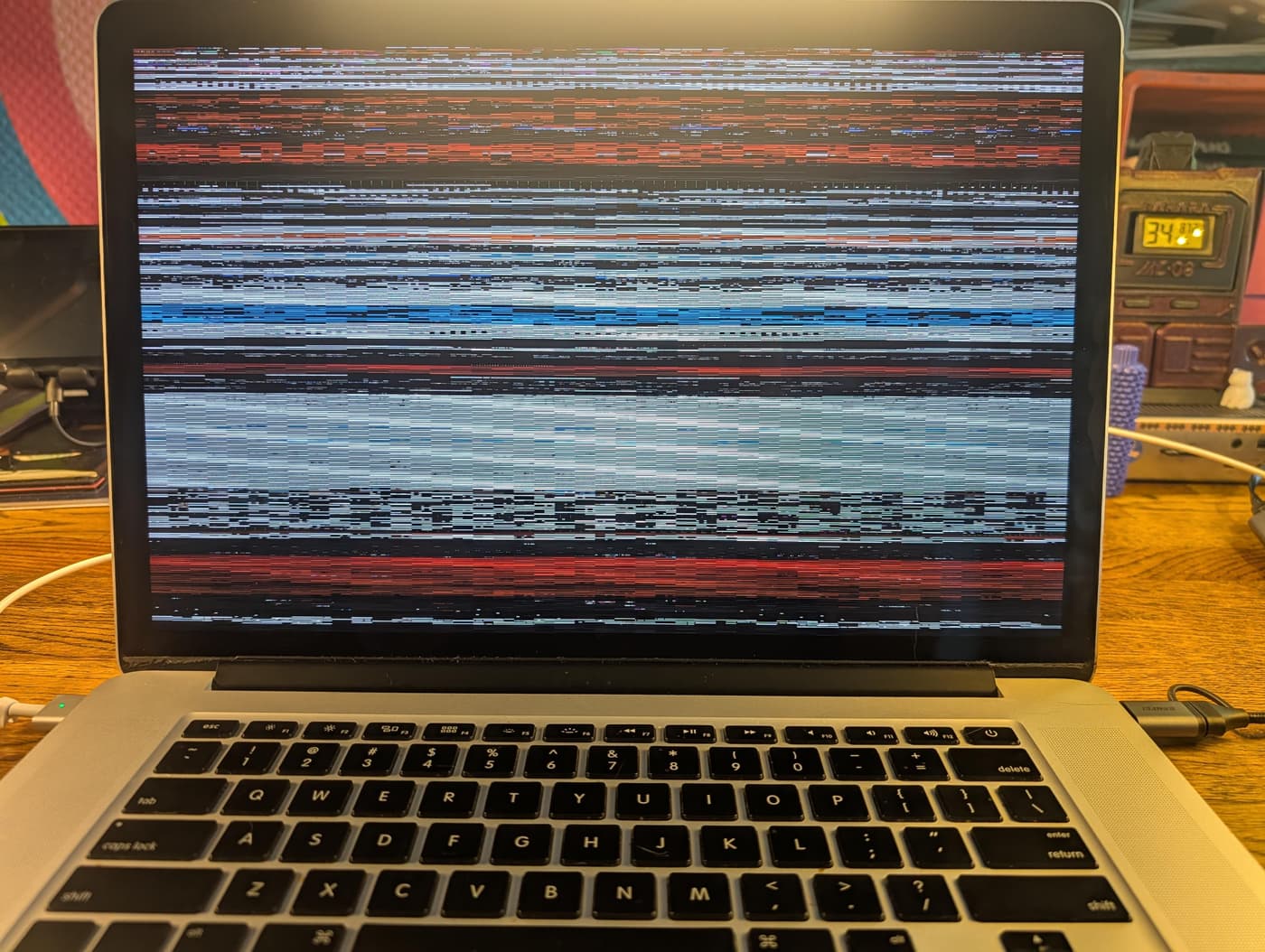
I suspect I dragged in some bum nvidia drivers along with the wifi ones.
From here, I learned about dnf history list and dnf history undo, along with more carefully segmenting the list of needful updates. I kind of applied a git bisect algorithm to the whole thing, danced with dnf update and dnf history undo to pare down the updates repeatedly in a rough binary search until things stopped breaking.
Oddly enough, it wasn't nvidia drivers - it was something in KDE or Qt, which I've got version locked for now until I deign to wrestle with all this again.
Now I have a working Fedora install. The wifi works, after a struggle with the open-source driver causing display glitches under heavy network traffic. Suspend works. The trackpad works. The keyboard works. The screen works. Probably a few things left not working, but this seems good enough for now.
This can be a fine homelab terminal and word processor for a few more years, and I can stop trying to make it do more than it wants to. Oh, and I still have this older install of macOS Catalina on a separate partition, just in case.
Boats that (sometimes) float
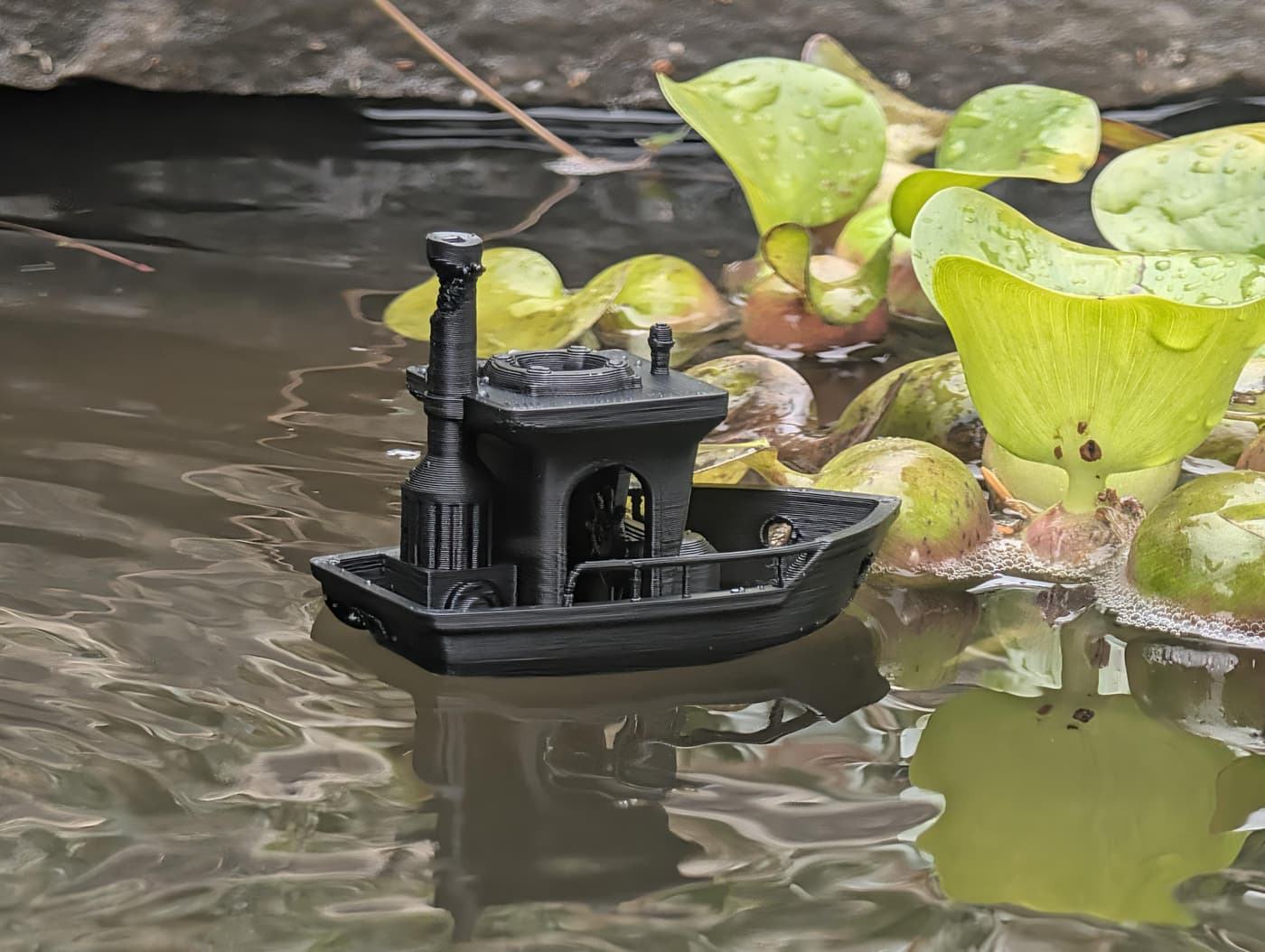
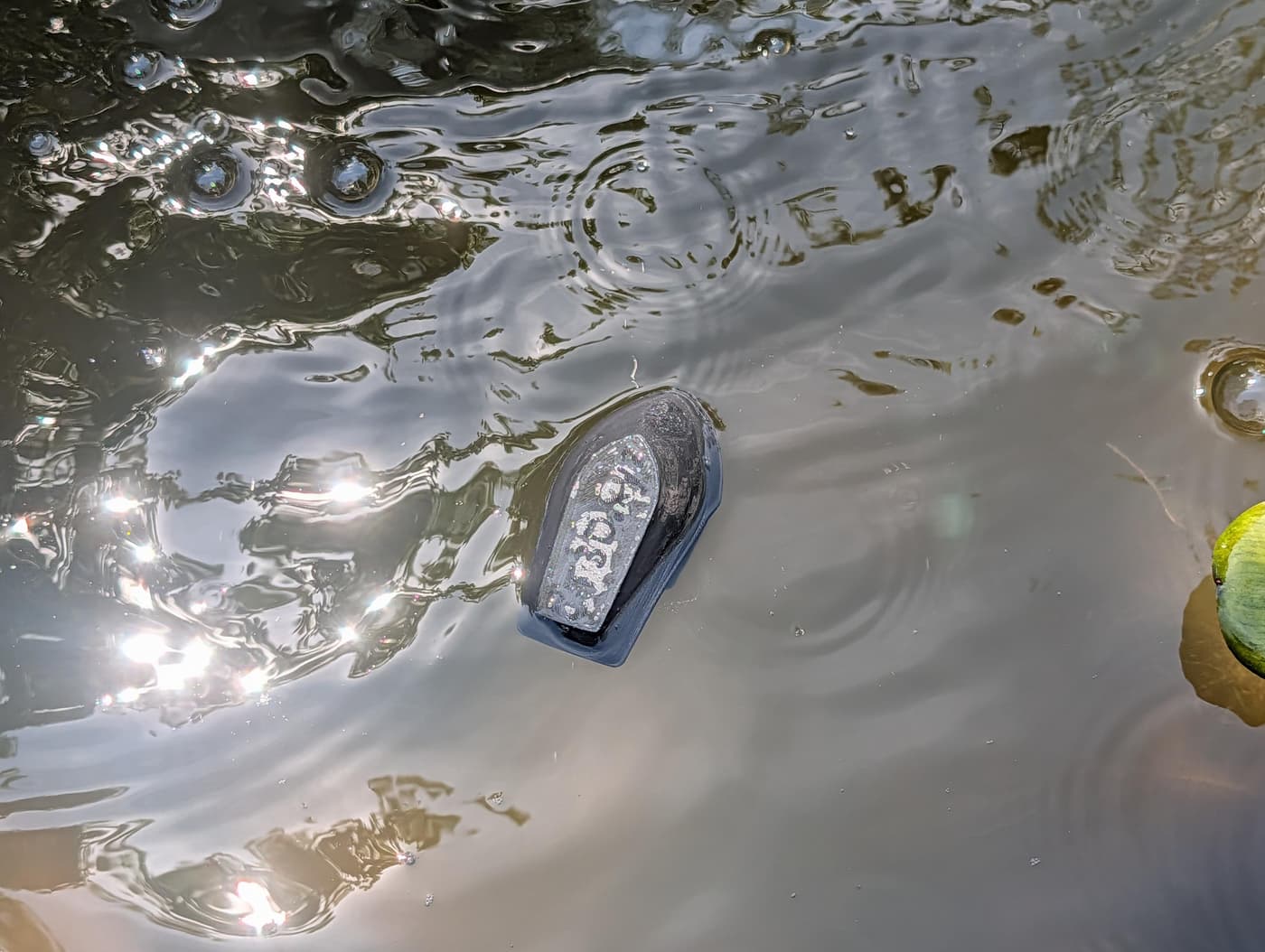
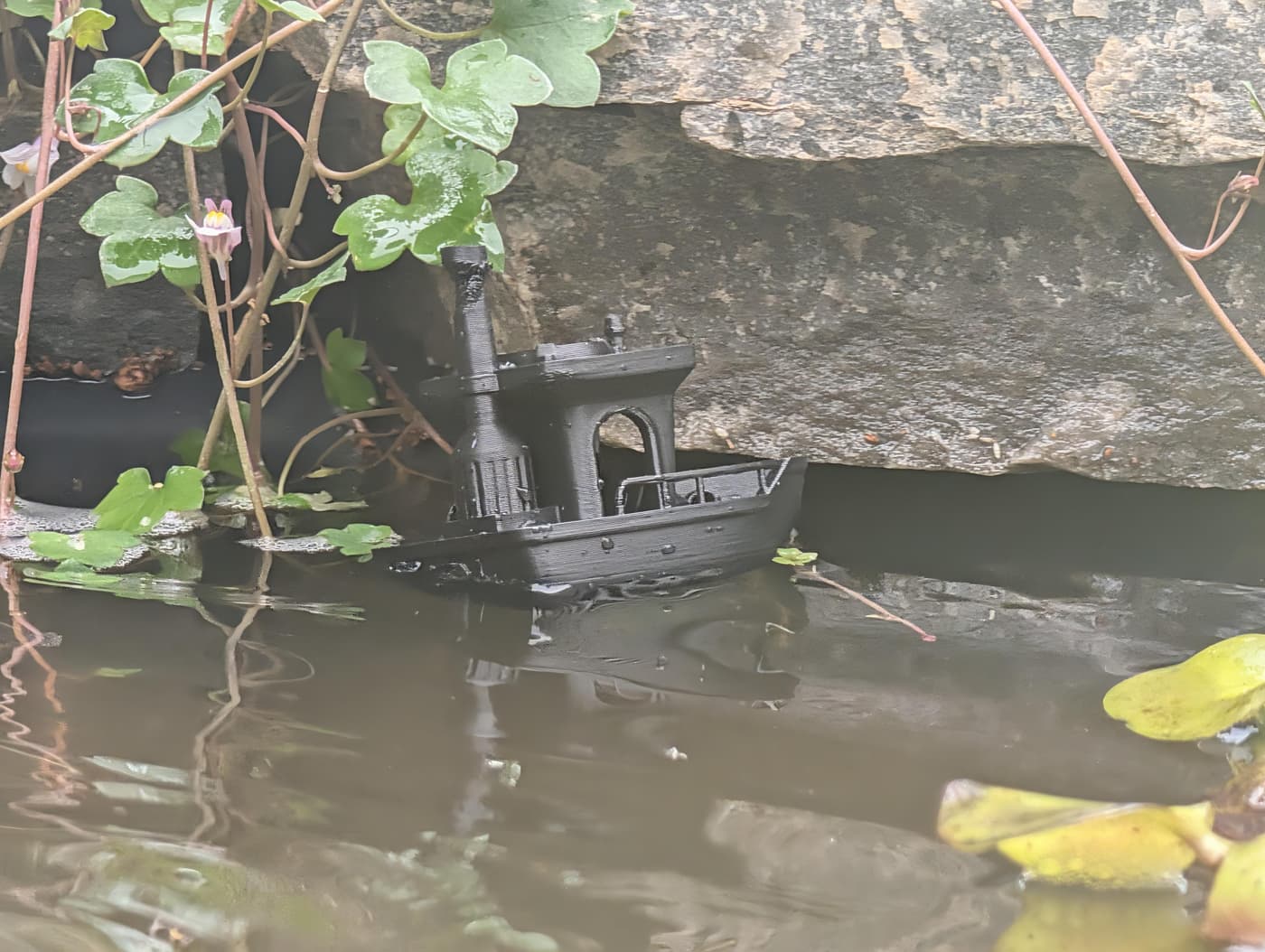
The 3D printing continues, and I have learned that a Benchy makes a deeply unconvincing boat. The standard one capsizes immediately. But I'm still learning this ASA stuff (continuing last week's adventures in materials I don't fully understand), and by the end of the week I'd printed one that actually floats, listing a bit to port, with a smokestack that got a little mangled in the print:
Gaming gear that (always) breeds
Gaming gear is accumulating on my desk again, apparently of its own accord, and apparently within a fairly specific color range:
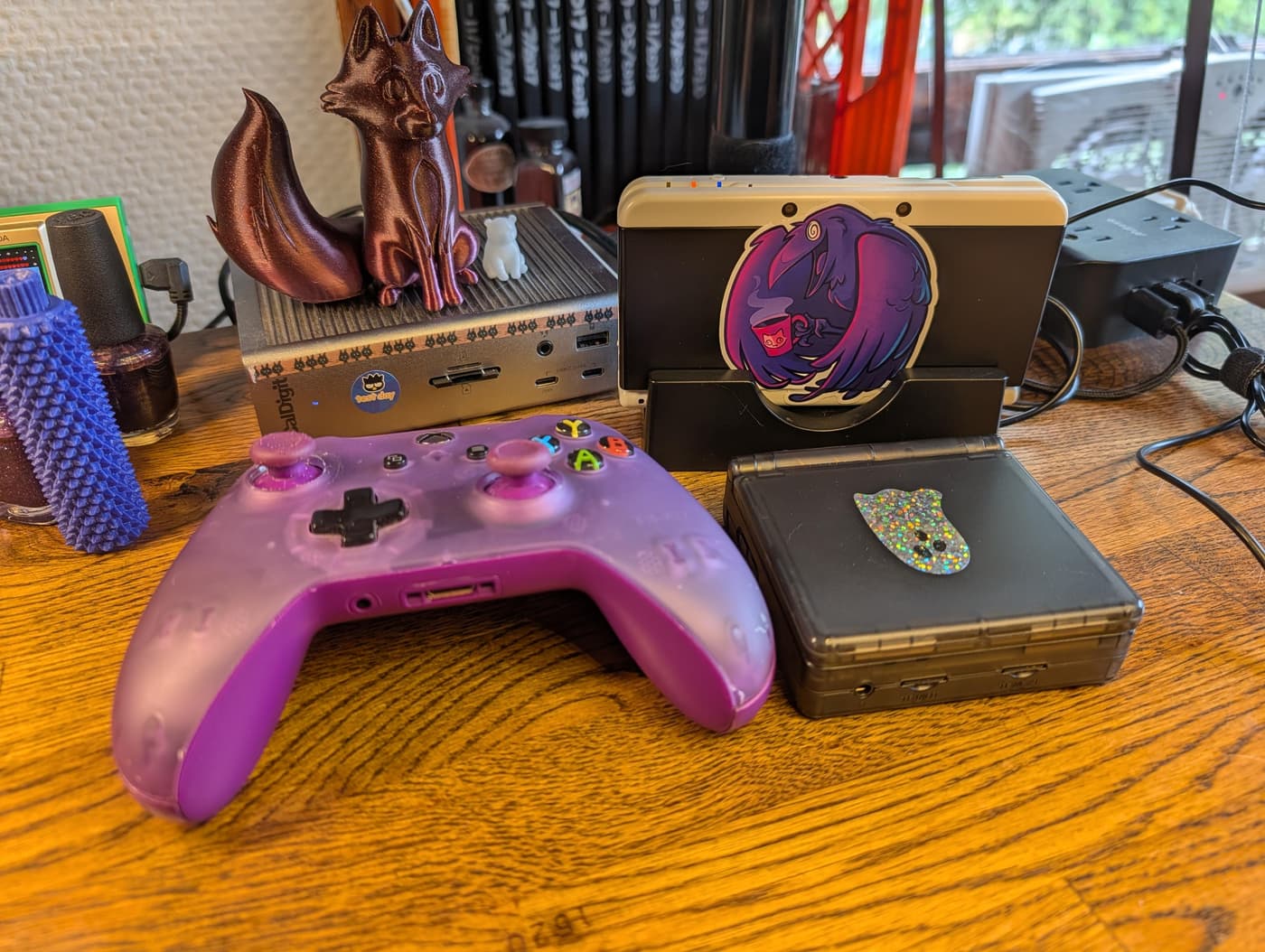
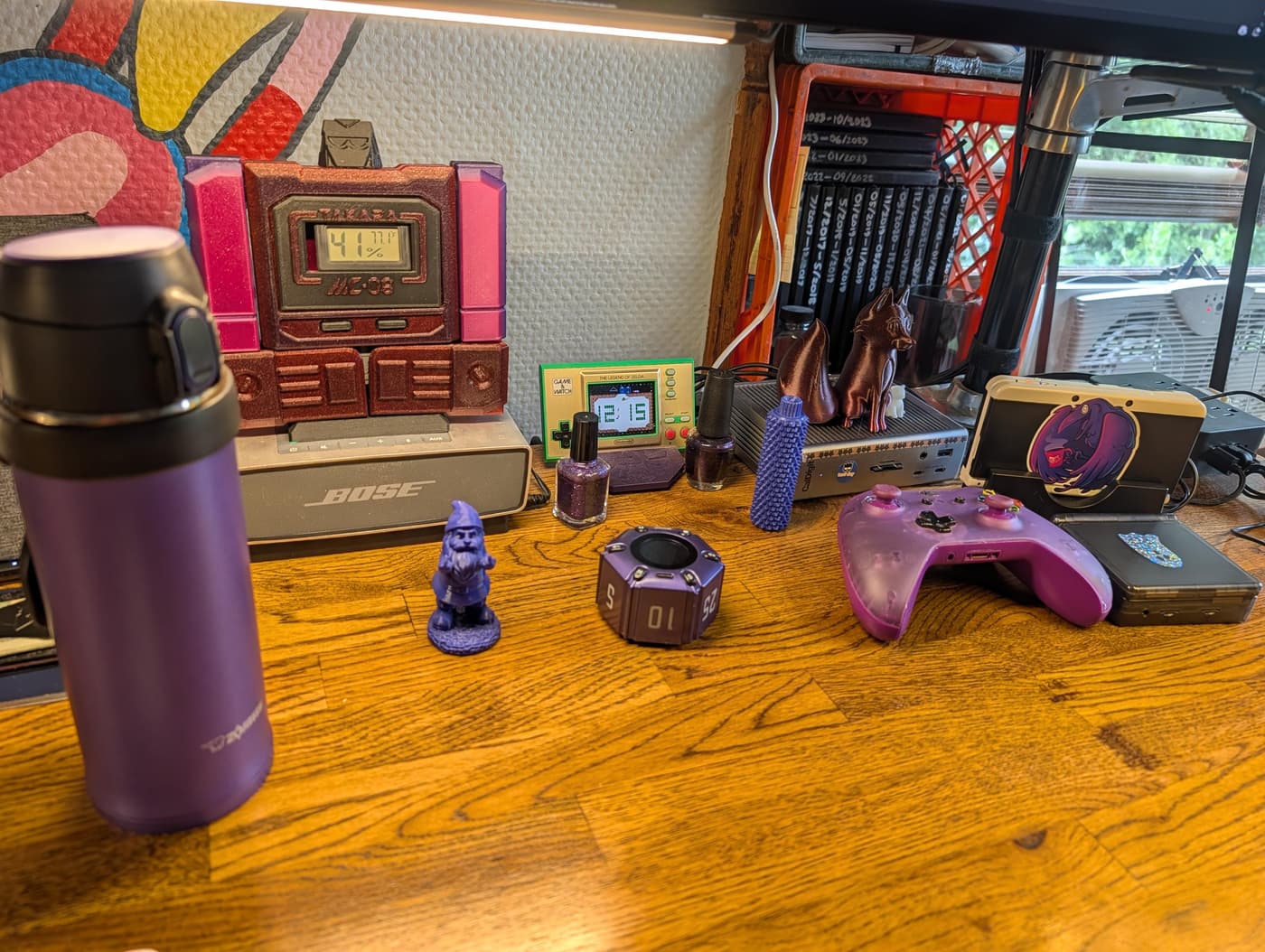
The culprit, I think, is that a random brain ping from a YouTube video gave me a sudden hankering to play Devil's Crush for the TurboGrafx-16 on my little Anbernic. Which led to Pokémon Pinball on the GBA, which led to wanting Metroid Prime Pinball on the DS. I've never much cared for video-game pinball before, and I'm genuinely terrible at the physical kind, but suddenly it has its hooks in me. Weird brain.
A tattoo for Puck
I scheduled my second tattoo this week, this one for Puck. I lost him back in 2015, and he was an unbelievably good pal.
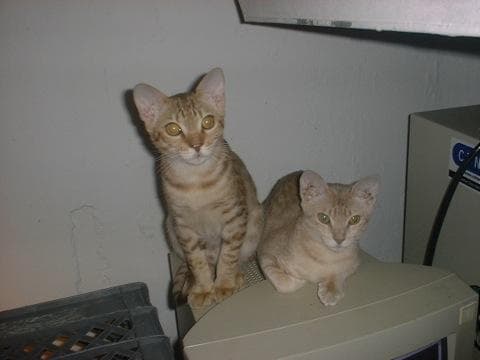
Puck and his sister Inanna were the first cats I took care of as an adult. They'd both purr and start kneading the moment I walked into a room. Puck would jump straight from the floor up onto my shoulders and go to sleep there. Eleven years gone, but worth a permanent mark now that I've broken the seal with Catsby.
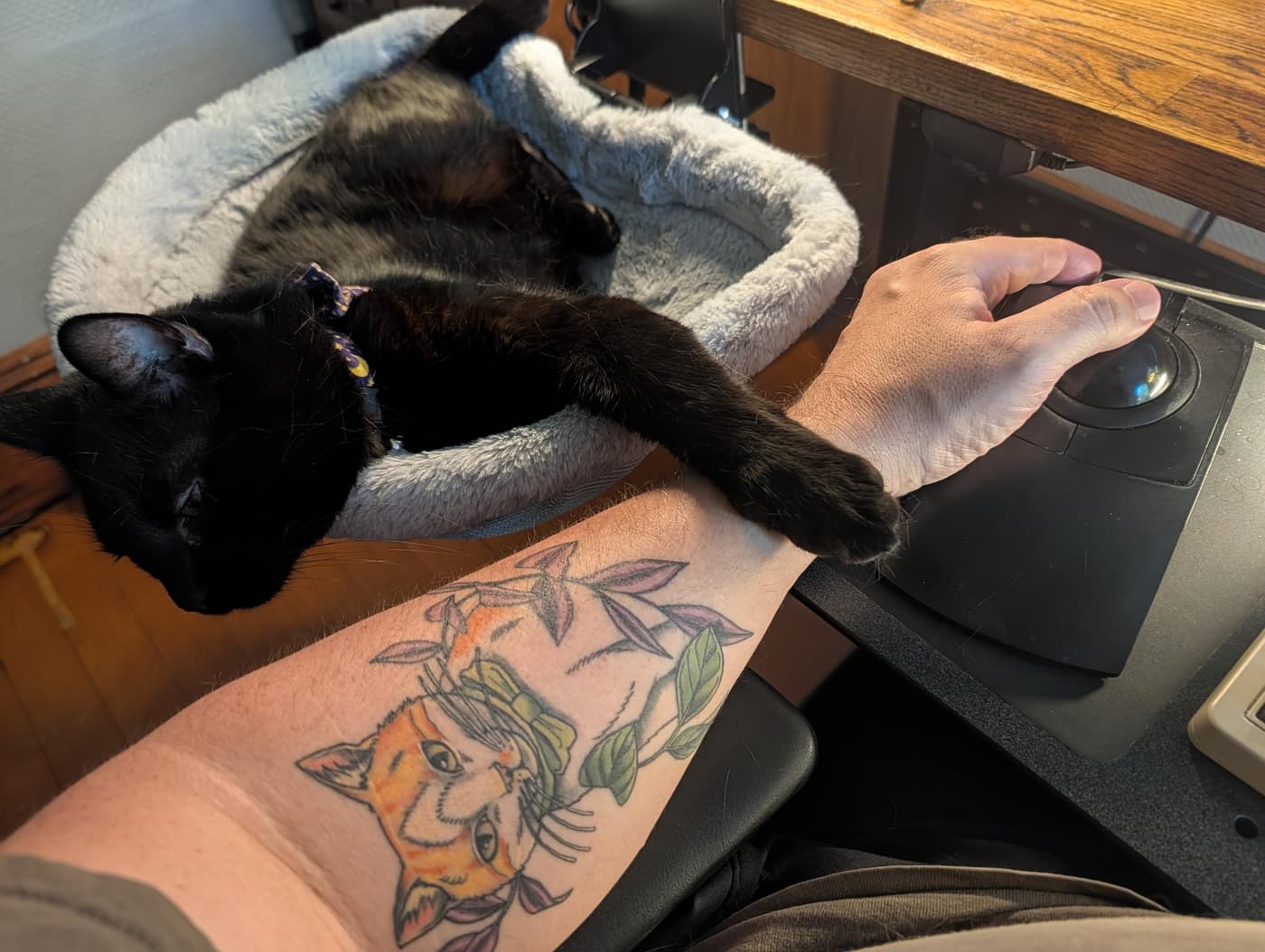
The current crew is doing fine, for the record. The trackball remains undefeated as the superior pointing device for the discerning cat caretaker, mostly because it leaves a free hand for the cat asleep on your arm.
Miscellanea
On the YouTube side, my one like of the week was a retro-TV rabbit hole: That's Incredible! The Most Sadistic Show on TV (and We LOVED It), on the 1980s ABC phenomenon that paraded bizarre people and dangerous stunts across Monday nights.
And a happy one for the podcast feed: the STARLOG Podcast is back, with Annalee Newitz. Always glad when good things come back from the dead, which, given the rest of this week, is apparently the theme.
eipi.boo: an anonymous confession board that lives entirely in your terminal over SSH. The terminal-as-app aesthetic gets me every time.
A small cluster of personal-website craft: The Website Specification, a platform-agnostic checklist of the technical features every decent website should have (for humans and agents), and JSON-LD Explained for Personal Websites on adding structured data so crawlers understand your pages.
On the blogging-mechanics front: a blog written entirely by hand, and a very practical how-to on managing a Hugo site from an Android phone in 2026, which I keep meaning to sort out for myself.
prop-for-that: what JavaScript knows (pointer position, viewport size, battery, network), now exposed to CSS via custom properties, batched down to one
setPropertyper frame. Nifty.For the gamedev shelf: Correlated randomness in Slay the Spire 2, a great deep-dive on how shared PRNG seeds leaked future-randomness info to crafty players, and Rivalis, an open-source real-time multiplayer framework for browser games.
The Vergecast had me thinking about hardware this week, which lined up neatly with two bookmarks: My Steam Machine is a 50ft HDMI Cable (couch gaming via a comically long cable plus Bazzite) and a takedown of the current crop of tacky smart glasses, which can't hide the chips and batteries yet so they all have those thick Larry-David's-dad rims.
Handheld retro adjacency: Starboard brings the Portmaster catalogue of community game ports to Android handhelds by running them in a real Linux environment under the hood.
Two on the agentic-web-and-gadgets theme: Richard MacManus on building "Ask Ricmac", an AI chatbot trained on his own years of writing, and xteink-tamagotchi, which displays your AI assistant's activity on a portable e-ink screen like a little digital pet.
Soundtrack for all of the above was the usual darkwave/synth rotation in heavy use: Clan of Xymox, VNV Nation, ACTORS, Kite, Ladytron, and TR/ST. And for some reason this week, I feel like throwing a bunch of video embeds in here, if only for me to listen to again.
Somehow this is Week 26, which means we're halfway through 2026 already. I refuse to discuss it further.